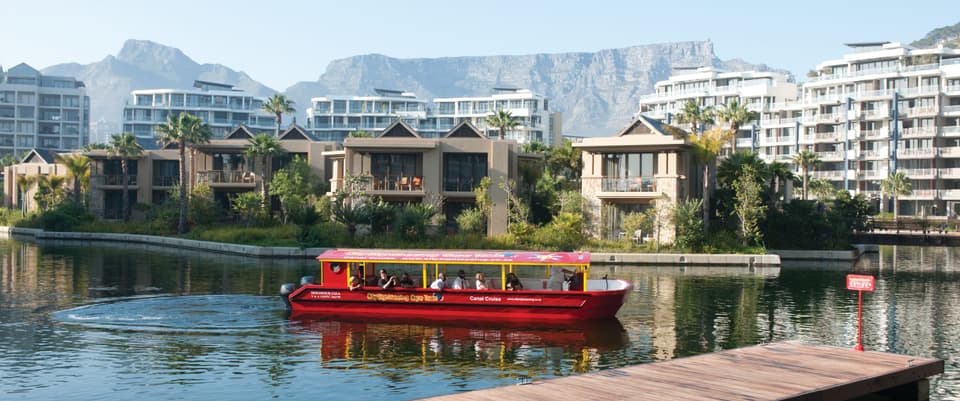
The V&A Waterfront harbour was not always the bustling hub it is today. It began as a small jetty in built by Jan van Riebeeck in 1654, through a commission by the Dutch East India Company to establish a refreshment station at the foot of Africa. The station enabled ships that had spent many months at sea to stop for fresh water and supplies. This was the foundation of the V&A Waterfront, and played an important role in the founding of the city of Cape Town.
While the cruise primarily uses sailing vessels like the Esperance or Serenity One, they are equipped with backup engines. If the wind is too low to sail, the crew will simply switch to motor power to ensure you still reach the best vantage point for the sunset. If the wind is too strong (dangerous conditions), the skipper may choose to stay within the protected harbour, offering a unique "city lights" cruise instead of heading into the open bay.
No, the route is "dictated by the wind." Because sailboats rely on the prevailing breeze, the captain decides the direction shortly before departure. In the summer (South-Easterly winds), you’ll likely head toward Milnerton Lighthouse. In the winter (North-Westerly winds), you’ll likely sail toward the Clifton coastline or Robben Island. Regardless of the wind, the boat is always positioned to face the sun as it dips below the Atlantic horizon.
While the Atlantic can have a swell, these cruises generally stay close to the coastline where the waters are calmer. The catamarans used (Serenity One) are dual-hulled, which provides much more stability and less "rocking" than traditional single-hull boats. However, if you are very sensitive, it is recommended to take motion sickness medication an hour before boarding or to request a spot on a motor vessel if available.
Unlike the daytime bus tours, this cruise is strictly timed to the actual sunset. Because Cape Town’s sunset shifts from roughly 5:30 PM in mid-winter to nearly 8:30 PM in mid-summer, the departure times are adjusted every few weeks. Always double-check your booking confirmation for the "Boarding Time," as the boat must depart promptly to catch the "Golden Hour" on the water.
The fleet typically includes both sailing catamarans and schooners. Catamarans are popular because they feature a large "trampoline" (a mesh netting) at the front where you can lie down and feel the ocean spray beneath you. If you prefer a more traditional experience, the schooner offers a classic wooden-deck feel. Regardless of the boat, there are no assigned seats—you are encouraged to move around the deck to capture the 360-degree views of Table Mountain and the Twelve Apostles.